





The FIFA World Cup 2026 is no longer just a football tournament. It is becoming the largest tourism, infrastructure, entertainment, hospitality, retail, transportation, and digital commerce event in modern history.
From airports redesigning terminals to hotels preparing for occupancy records… from stadiums undergoing billion-dollar upgrades to retailers like Amazon preparing for global merchandise demand… the World Cup is already transforming North America before the first whistle is even blown.
And this time, the scale is unlike anything the sports world has ever seen.
FIFA World Cup 2026 Will Be the Biggest Sporting Event Ever Created
For the first time ever:
- 48 national teams will compete
- 104 matches will be played
- 3 countries will host the tournament
- Millions of tourists are expected to travel across North America
- Billions of viewers will follow online and on television
The tournament officially runs from June 11 through July 19, 2026, but economically, culturally, and digitally, the World Cup has already started.
Google Trends shows explosive search growth around:
- “FIFA World Cup 2026”
- “World Cup tickets”
- “FIFA tickets”
- “World Cup schedule and locations”
- “MetLife Stadium”
- “Hospitality packages”
The internet is entering full World Cup mode.
Airports Are Quietly Preparing for the FIFA World Cup Explosion
One of the biggest untold stories surrounding World Cup 2026 is airport transformation.
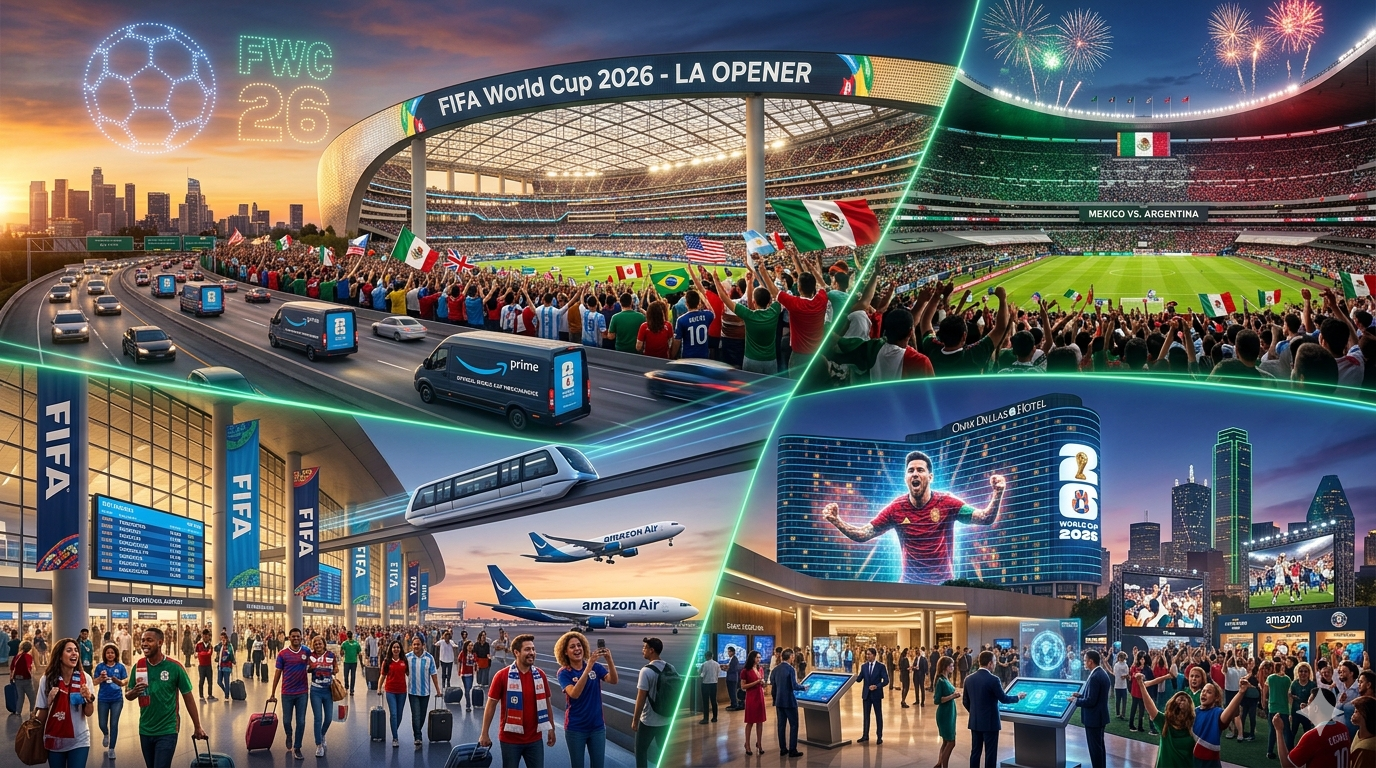
Major international airports across the United States, Canada, and Mexico are already preparing for:
- Increased international passenger volume
- Multilingual wayfinding systems
- Expanded customs operations
- New transportation routes
- Fan welcome centers
- FIFA-themed branding and decor
- Tourism partnerships
- Enhanced security operations
Airports are expected to become mini entertainment hubs during the tournament.
Cities hosting matches understand one reality:
The first impression millions of visitors will experience is not the stadium.
It is the airport.
Expect to see:
- Massive digital FIFA displays
- National team banners
- Sponsor activations
- Interactive fan installations
- AI-powered travel assistance
- Expanded VIP and hospitality lounges
The World Cup economy begins the moment travelers land.
Hotels Are Preparing for Historic Demand
The hospitality industry may become one of the tournament’s biggest financial winners.
Hotels near stadiums are expected to experience:
- Record occupancy levels
- Premium pricing surges
- Long-term international bookings
- Luxury hospitality packages
- Extended stay tourism
- Corporate sponsorship reservations
Global hotel brands including:
are expected to see enormous demand spikes during the tournament.
Entire neighborhoods surrounding stadiums could transform into 24-hour fan zones filled with:
- watch parties
- concerts
- pop-up restaurants
- branded experiences
- influencer events
- sports bars
- fan festivals
The World Cup does not sleep.
Is Amazon Ready for the FIFA World Cup 2026 Surge?
One of the biggest overlooked questions is whether Amazon and other e-commerce giants are prepared for the massive spike in global football-related purchasing.
Fans worldwide are expected to buy:
- national team jerseys
- flags
- face paint
- collectibles
- TVs
- streaming devices
- travel gear
- portable chargers
- camera equipment
- football boots
- tailgating products
- FIFA merchandise
Amazon’s logistics network may face one of its biggest sports-commerce moments ever.
During previous global sporting events, online shopping exploded around:
- same-day delivery
- merchandise demand
- streaming equipment
- home entertainment systems
But World Cup 2026 may operate at an entirely different scale because:
- more teams are involved
- more countries are emotionally invested
- North America has enormous consumer spending power
- social media drives instant purchasing behavior
The real question is no longer whether fans will spend.
The real question is whether supply chains can keep up.
Every FIFA World Cup 2026 Stadium Hosting Matches
These stadiums are preparing to become the center of the sports universe.
United States Host Stadiums
MetLife Stadium
East Rutherford, New Jersey
Expected to host some of the tournament’s biggest matches, including the final. Search interest around MetLife Stadium is already climbing rapidly.
AT&T Stadium
Arlington, Texas
One of the most technologically advanced sports venues in the world.
SoFi Stadium
Inglewood, California
A futuristic stadium expected to become one of the tournament’s entertainment capitals.
Mercedes-Benz Stadium
Atlanta, Georgia
Known for elite fan experience and one of the largest video boards in sports.
Hard Rock Stadium
Miami Gardens, Florida
A likely hotspot for international tourism and Latin American football fans.
Lincoln Financial Field
Philadelphia, Pennsylvania
Historic sports culture meets global football energy.
Lumen Field
Seattle, Washington
One of America’s loudest stadium environments.
Levi’s Stadium
Santa Clara, California
Silicon Valley technology and football culture collide.
NRG Stadium
Houston, Texas
A major gateway city for international visitors.
Arrowhead Stadium
Kansas City, Missouri
Home to one of the loudest fanbases in American sports.
Gillette Stadium
Foxborough, Massachusetts
A critical Northeast destination for fans traveling between cities.
Canada Host Stadiums
BC Place
Vancouver, Canada
BMO Field
Toronto, Canada
Canada is expected to experience one of the largest tourism booms in its sports history.
Mexico Host Stadiums
Estadio Azteca
Mexico City, Mexico
One of the most legendary football stadiums on Earth.
Estadio BBVA
Monterrey, Mexico
A modern football cathedral with breathtaking mountain views.
Estadio Akron
Guadalajara, Mexico
A key location for one of football’s most passionate fan cultures.
The United States Economy May Never Look the Same
The World Cup’s impact goes far beyond football.
Industries expected to benefit include:
- airlines
- ride-sharing companies
- restaurants
- streaming platforms
- tourism agencies
- sports betting companies
- security firms
- transportation networks
- hotels
- food delivery apps
- retail stores
- creators and influencers
- e-commerce brands
Even small businesses could experience unprecedented growth during the tournament.
This is not just sports.
This is an economic superstorm.
Why This Content Will Keep Growing for Years
World Cup 2026 content is evergreen because:
- fans constantly search for tickets
- travel planning never stops
- stadium interest grows daily
- rankings and squads constantly change
- schedules update continuously
- hospitality demand keeps rising
The closer the tournament gets, the more traffic explodes.
And once the matches begin, search demand could become nearly nonstop for over a month straight.
Final Thought: FIFA World Cup 2026 Is Becoming a Global Obsession
The World Cup is no longer just about who wins the trophy.
It is about:
- tourism
- technology
- culture
- commerce
- airports
- hotels
- digital media
- infrastructure
- streaming
- online shopping
- sponsorships
- entertainment
- global attention
Every airport terminal.
Every hotel lobby.
Every sports bar.
Every online marketplace.
Every host city.
Everything is preparing for the arrival of the world.
And when the first match kicks off in June 2026, billions of people will already be emotionally invested long before the opening whistle.