







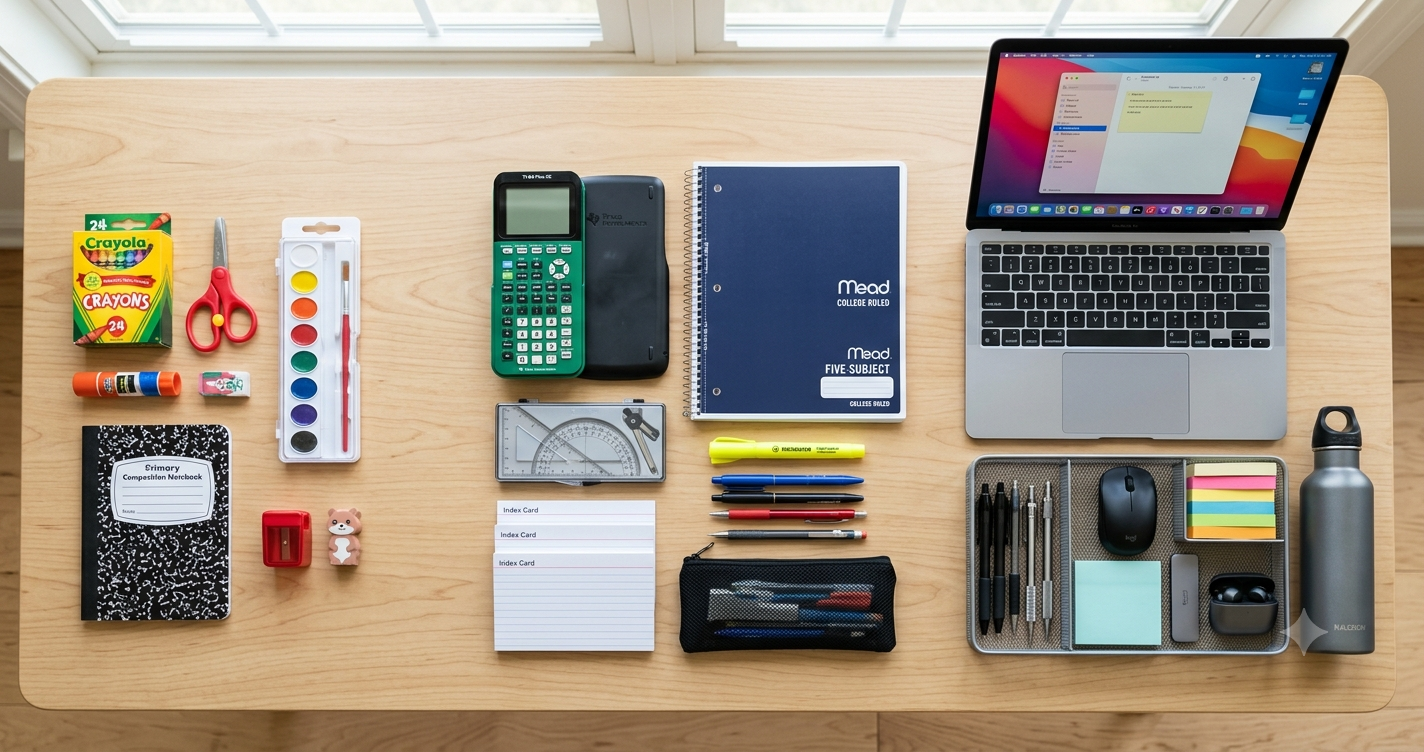
Back to school supplies 2026 shopping looks a little different than it did even a couple of years ago — classrooms are leaning more on shared tech, sales-tax holidays are shifting the best-price windows earlier, and what a kindergartner needs has almost nothing in common with what a college freshman needs. The mistake most shopping lists make is treating “school supplies” as one category. It isn’t. What actually moves the needle changes completely as a student moves from finger paint to final exams.
Kindergarten
Kindergarten classrooms are built around sharing, not individual ownership — most teachers ask for supplies that go straight into a communal bin, so expect to buy multiples of the basics rather than one nice set. The heavy hitters at this age are consumables: jumbo crayons, washable markers, glue sticks, and safety scissors sized for small hands. Durability matters less here than at any other grade, since most of it gets used up or replaced by winter break anyway.
Middle School (Grades 7–12)
Middle school is where supply lists stop being generic and start getting subject-specific — separate notebooks and folders per class, a dedicated pencil case that survives being crammed into a locker, and enough bulk consumables to make it through a full semester without a mid-year restock run. This is also the point where organization becomes the actual skill being tested, not just the supplies themselves.
The 1 Set Back to School Supplies Kit for 7–12 Grades covers that shift well in one purchase — notebooks, markers, pencils, and the rest of the bulk essentials bundled together, which saves a parent from piecing together six separate items across three stores during the busiest shopping window of the summer.
High School
High school supply lists pivot again, this time toward productivity and personal organization rather than classroom consumables. A real academic planner, a laptop sleeve or case, and — for most students — a graphing calculator become the priority items. The TI-84 Plus CE is the one accepted across the SAT, ACT, and AP exams, and it’s worth buying carefully here: a used one in good condition holds up fine and can run 40–60% less than retail, while off-brand calculators are often not permitted on standardized tests at all.
College
College is less a supply list and more a small ecosystem to build — the “supplies” now include how a student studies, not just what they carry to class. High-capacity binders and an academic planner still matter, but the list shifts to things like a laptop stand for posture during long study sessions, a compact stapler and hole punch for a dorm desk, and index cards or sticky flags for research and essay drafting. This is also where spending a little more on one or two high-use items (a real desk lamp, a decent laptop sleeve) pays off more than stocking up on cheap basics.
Office / Home Workspace Restock
Back-to-school season is also, quietly, back-to-office season — the same July and August sales that stock up a kid’s backpack are the cheapest window of the year to restock a home office or desk setup too. Copy paper by the ream, a decent stapler, sticky notes, and a proper desk organizer all show up on sale alongside the school supplies, and buying them in the same shopping pass avoids paying full price for the same items in October.
Smart Shopping Tips That Apply Across Every Grade
- Wait on the official list before buying specialty items. Teachers often send or update supply lists in late July or the first week of school — buying a generic calculator or binder setup in advance can mean buying the wrong thing twice.
- Shop mid-July through early August for the best prices. Most major retailers run back-to-school sales in this window, and many states add a sales-tax holiday on top of it.
- Buy consumables in bulk, but don’t stockpile a full year. Pencils, glue sticks, and folders are always cheaper in bulk in August than they are mid-year, but buying six months of markers your kid won’t use by December just wastes money.
- Check what the school already provides. Many districts issue Chromebooks or classroom-wide supplies — a quick email to the teacher before shopping can save real money.
The families who overspend on back-to-school shopping usually aren’t buying too little — they’re buying the wrong things for the grade level, or buying everything from one generic list regardless of age. Matching what you buy to what a student at that specific stage actually uses is what keeps back to school supplies 2026 shopping from turning into a $200-per-kid guessing game.