






If you’re comparing options for a back brace for lifting heavy loads at work, it’s worth knowing upfront that the research on whether they actually prevent injury is more mixed than most product listings let on. That doesn’t mean they’re useless — it means the honest answer is more specific than “yes, buy one and you’re protected.”
What the Research Actually Shows
OSHA does not classify back belts as personal protective equipment, and NIOSH’s review of the evidence found no proof that back belts reduce spinal load or lower injury rates on their own. A large study tracking over 9,000 workers found no meaningful difference in back injuries or pain between those who wore support belts and those who didn’t. The strongest predictor of a future back injury, that study found, wasn’t the absence of a belt — it was a prior history of back pain.
None of that means back braces do nothing. What the research does suggest is that their main practical value isn’t spinal support in a mechanical sense — it’s the reminder effect. A snug brace makes awkward bending and twisting more noticeable, which nudges people toward better lifting form. Some workers also report genuine comfort and confidence benefits, particularly with long shifts of repetitive lifting, even if that benefit isn’t measurable on an MRI.
So Is a Back Brace Worth Buying?
If you’re expecting a back brace to function like a seatbelt — something that mechanically prevents injury — the evidence doesn’t back that up, and no listing should promise it. If you’re looking for something that reinforces good lifting habits, keeps you a little more upright and aware during a long shift, and adds compression comfort during repetitive lifting or standing, that’s a more realistic and honest expectation, and it’s the category most work back braces are actually built for.
What to Look For in a Work Back Brace
- Suspender-style straps, not just a belt. A belt alone tends to slide down during movement; built-in suspenders keep the brace positioned correctly through bending, reaching, and lifting.
- Adjustable, dual-pull tension straps. These let you tighten support on demand rather than being locked into one fixed compression level all shift.
- Breathable material. Anyone wearing this for a full shift in a warehouse or outdoors needs airflow, not a sweat trap.
- Reinforced support stays. Rigid or semi-rigid panels along the lower back add structure that a plain elastic wrap doesn’t provide.
- A real size chart. Fit matters more than brand name here — a brace sized off your actual waist measurement will outperform a “one size fits most” version that shifts around all day.
The SOLOEVER Work Back Brace
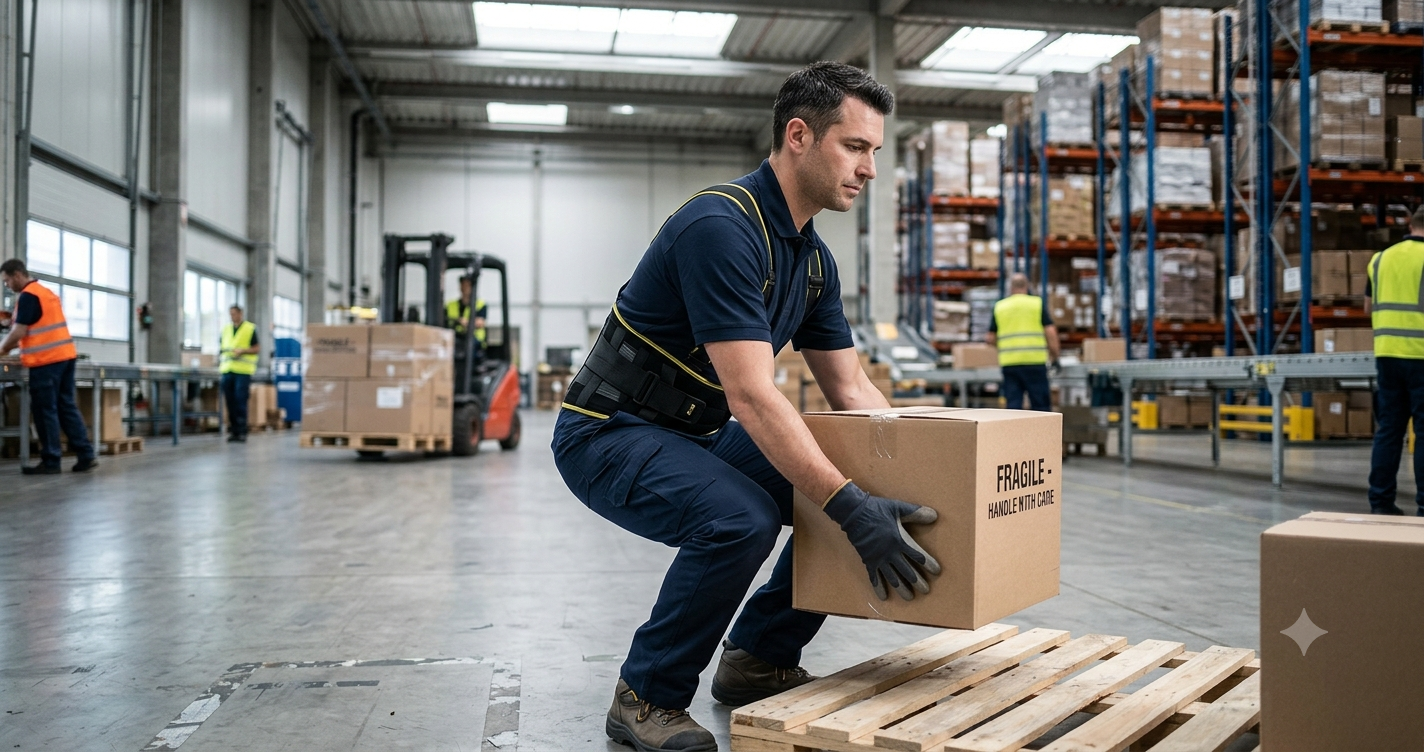
The SOLOEVER Work Back Brace for Men & Women covers most of that checklist directly. It’s built with adjustable suspenders to keep the brace from sliding during movement, double-pull tension straps so you can adjust support level without removing it, and breathable material intended for long shifts in warm conditions — the kind of setup aimed at construction, warehouse, and moving work rather than office posture correction. It comes in sized options rather than a single stretch-to-fit design, which matters given how much fit affects whether a brace actually stays in place under load.
It’s currently one of the better-reviewed options in this category on Amazon, with thousands of recent buyers in the warehouse and moving-labor space specifically — the audience this brace is actually built for.
Using It the Right Way
A back brace works best as one part of a lifting routine, not a replacement for one:
- Bend at the knees and hips, not the lower back, and keep loads close to your body.
- Avoid twisting while holding weight — pivot your feet instead.
- Don’t treat the brace as permission to lift heavier or more often than you normally would; that false sense of security is one of the actual documented risks.
- Take it off during rest periods rather than wearing it compressed all day, every day — extended constant compression can contribute to muscle deconditioning over time.
A back brace for lifting isn’t a guarantee against injury, and no honest source will tell you otherwise. What it can reasonably do is support better lifting habits and add comfort through a long, repetitive shift — and for that purpose, a well-built, properly sized option like the SOLOEVER Work Back Brace is a reasonable pickup before your next physically demanding stretch of work.